Case Study
First Word
Graduation VR app (99/A+) — Arabic Sign Language to voice for deaf users.
- Role
- Backend / Integration Engineer
- Category
- Full-Stack
- Stack
- Python · Unity · Meta Quest 3
- Availability
- Private / local
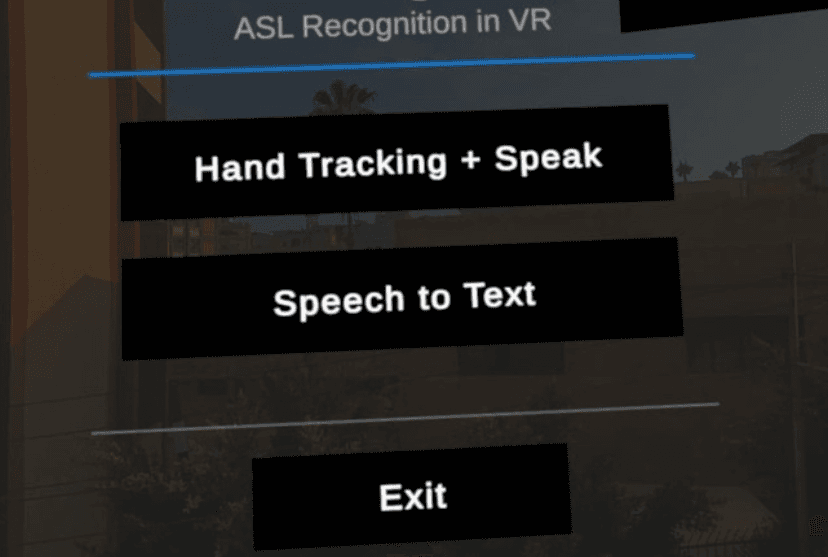
VR interface — Hand Tracking + Speak, Speech to Text modes
1/2The challenge
First Word was my graduation project — and one of the most meaningful builds I've shipped. The goal: help deaf users who cannot hear or speak communicate through Meta Quest 3 VR glasses. The user performs Arabic Sign Language; the headset tracks hands and renders the signs as text in front of them. When they finish what they want to say, a specific gesture tells the glasses to convert that text into spoken voice. The system also captures external speech from people around them and converts it to text they can read inside VR.
Architecture
I owned the speech pipeline integration layer. Built Python backend services connecting Speech-to-Text and Text-to-Speech APIs to the Unity VR runtime, minimizing round-trip latency so sign → text → voice felt responsive enough for real conversation. Bridged a web-style async API world with Unity's game-loop constraints via optimized payloads and tight handoff timing.
Challenges overcome
Unity + cloud STT/TTS latency was the core enemy. Reduced payload sizes, optimized API call sequencing, and tuned the gesture trigger so voice output only fired after the user explicitly confirmed — preventing half-finished sentences from being spoken aloud.
Lessons learned
Accessibility tech has zero tolerance for latency. Every 200ms matters when someone is trying to hold a conversation. This project also taught me that graduation work can be portfolio-grade if you treat the integration layer as production engineering, not a demo script.